September 19 we left Vietnam to explore part of Cambodia for 6 days. I just finished reading Loung Ung’s memoir First They Killed My Father about her life age 5-10 (1975-80) as she experienced Pol Pot’s Khmer Rouge work camps, starvation, and the killing of family members. Eventually, her oldest brother was able to get her secretly to Vietnam, then, Thailand, and finally immigrated to the United States. I truly did not know what to expect on this journey.
Day 1: We were surprised that our entrance into Cambodia was easy–we handed our passports and $35 US dollars each to the airport officials; minutes later, they returned our passports, stamped. Next thing we found ourselves riding in a “tuk-tuk” (pronounced “took took”) for a glorious open-air 30 minute ride to our first hotel. (Note: Scout claims that the tuk-tuk ride was the best thing about the trip!)
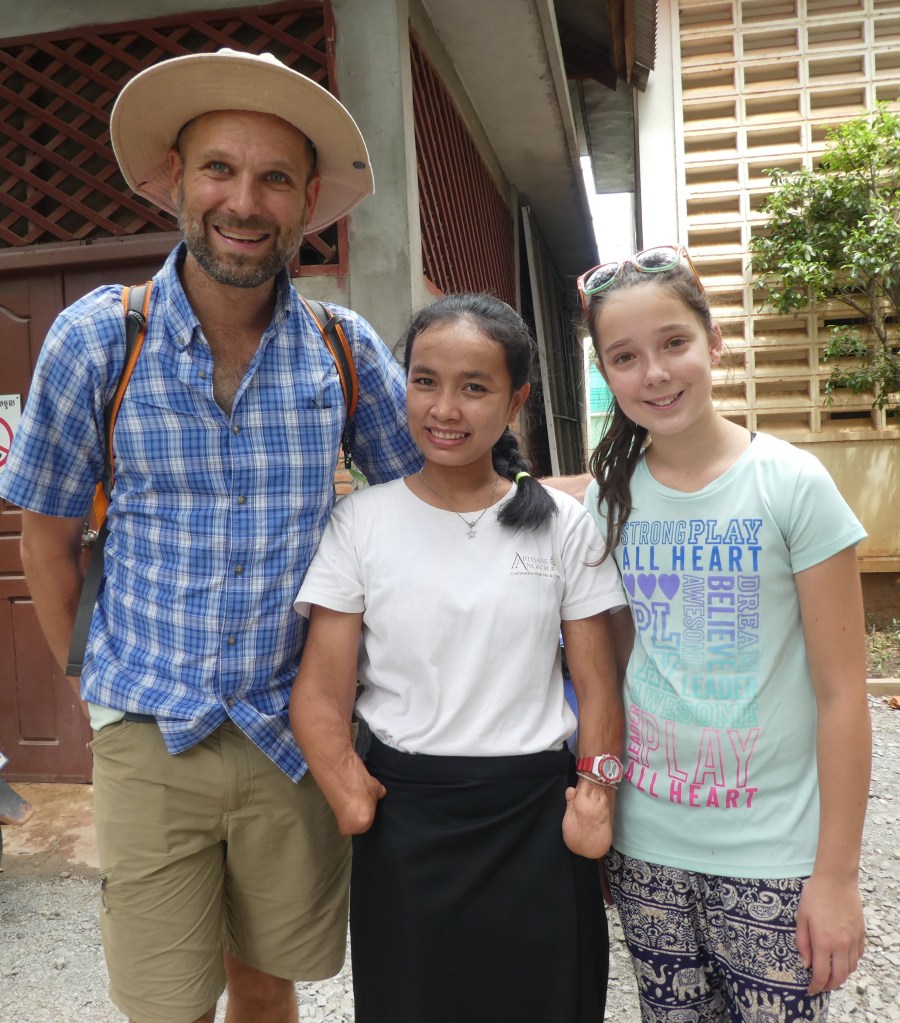
We spent the afternoon walking around Siem Reap’s town center, which led us to Les Chantiers Écoles, an artisans school for under-privileged children. Here they teach teens stone carving, lacquer-making, silk painting, and wood sculpting http://www.artisansdangkor.com/. The teens train daily for 6 months on one skill; then, they are eligible to be hired to produce artwork that is sold in the Artisans d’Angkor shops. Some become master artists who work on commissioned pieces.
We met the most kind and lovely people who had been trained there. One young woman chose to work in the shop rather than continue working with silver, likely due to her deformed hands. We returned to the Artisans d’Angkor shop a few times, knowing both the history of the pieces for sale, that they were authentically made, and that we (hoped) we were supporting Cambodia’s most impoverished people.
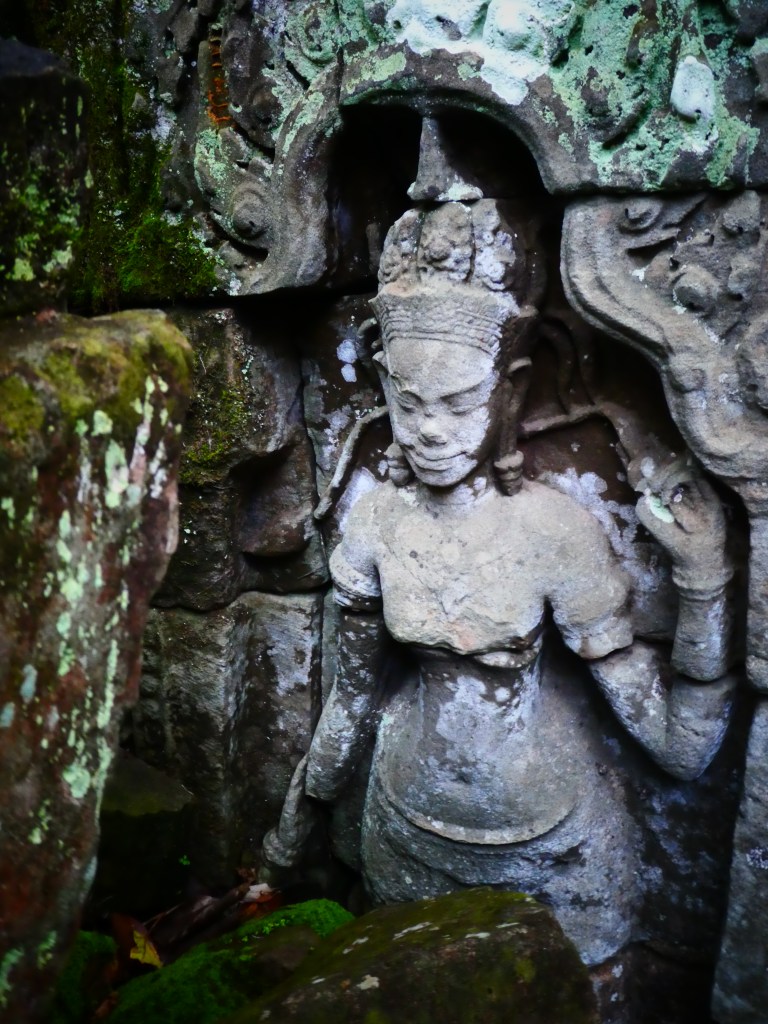
Day 2: We had arranged a private tour of Angkor temples so that we would be deeply immersed in the history of these special sites. King Suryavarman II began the construction of the most famous temple, Angkor Wat (which means “City which is a Temple”), in the 12th century in dedication to the Hindu god Vishnu. Long-term guide Borady first took us to Angkor Wat through the east side backdoor–where tour buses are not allowed. This is the largest religious temple in the world and is truly magical both from outside and inside. For example there are detailed carvings of battle scenes and epic events throughout.
NOTE: Many reliefs showed signs of people touching them–especially women’s breasts, but also the eyes of elephants and gods, and swords. Today visitors are kept at an arm’s distance from some of the important carvings.
We also went to the ancient city of Angkor Thom, founded by King Jayavarman VII in the late 12th century. The city has 5 impressive gates. The most famous ruin is located at the center of Angkor Thom: Bayon. I was impressed by this temple perhaps more than the others: It is shaped like a pyramid and has more than 200 huge stone faces that are smiling and “enigmatic.”
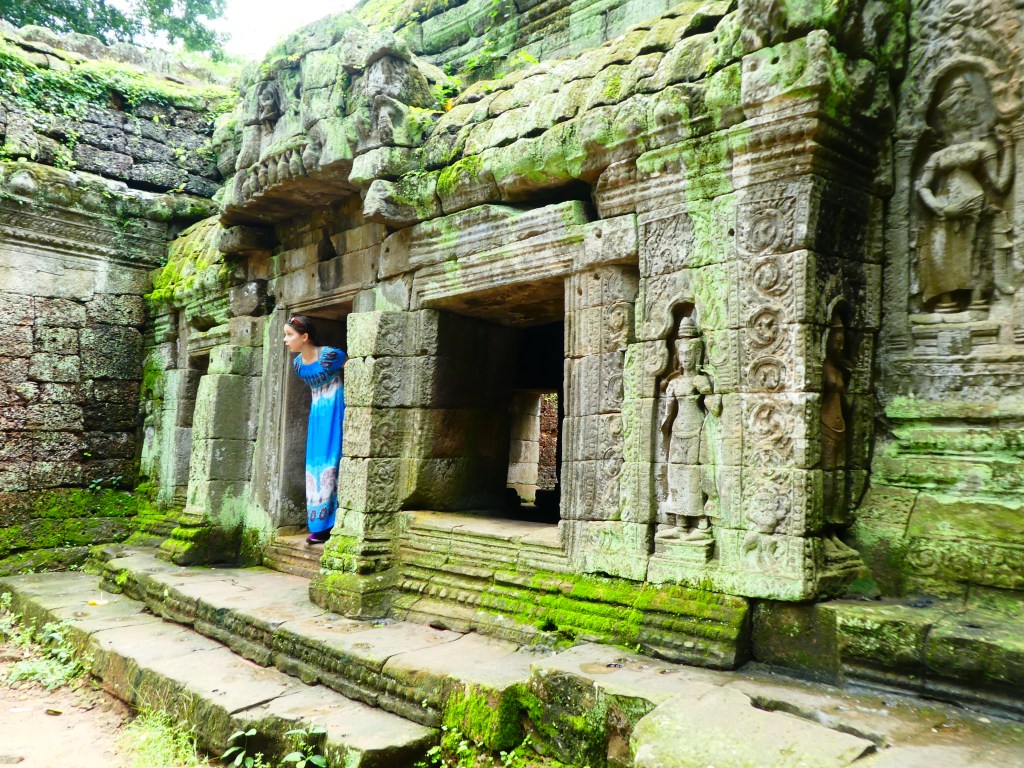
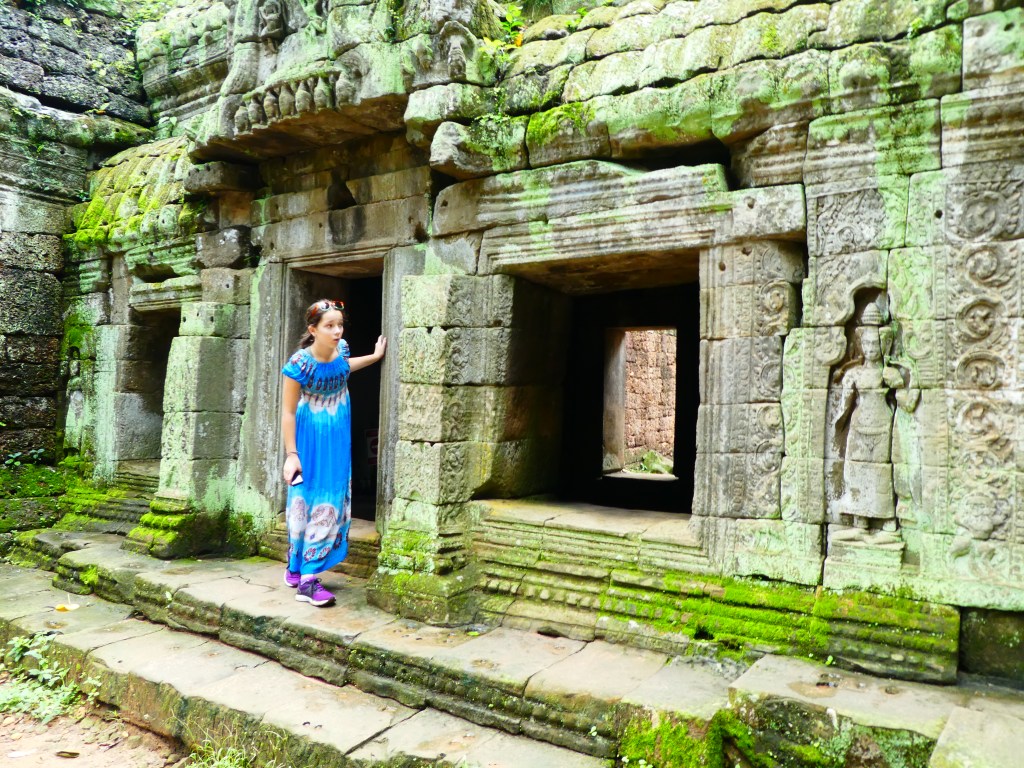
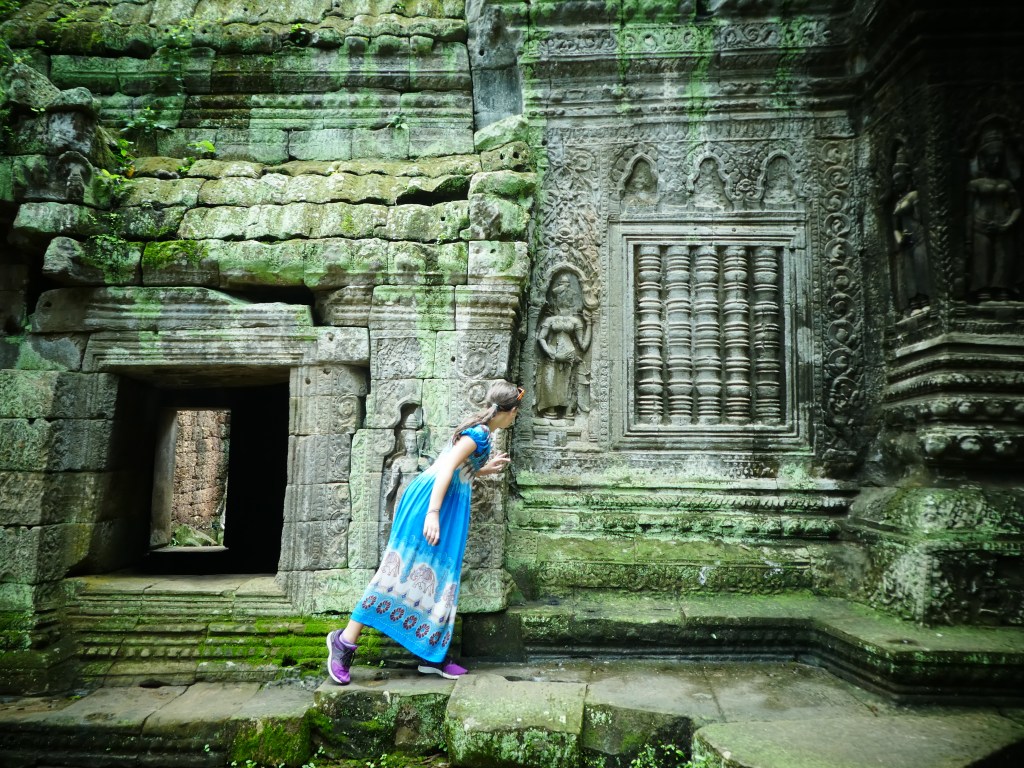
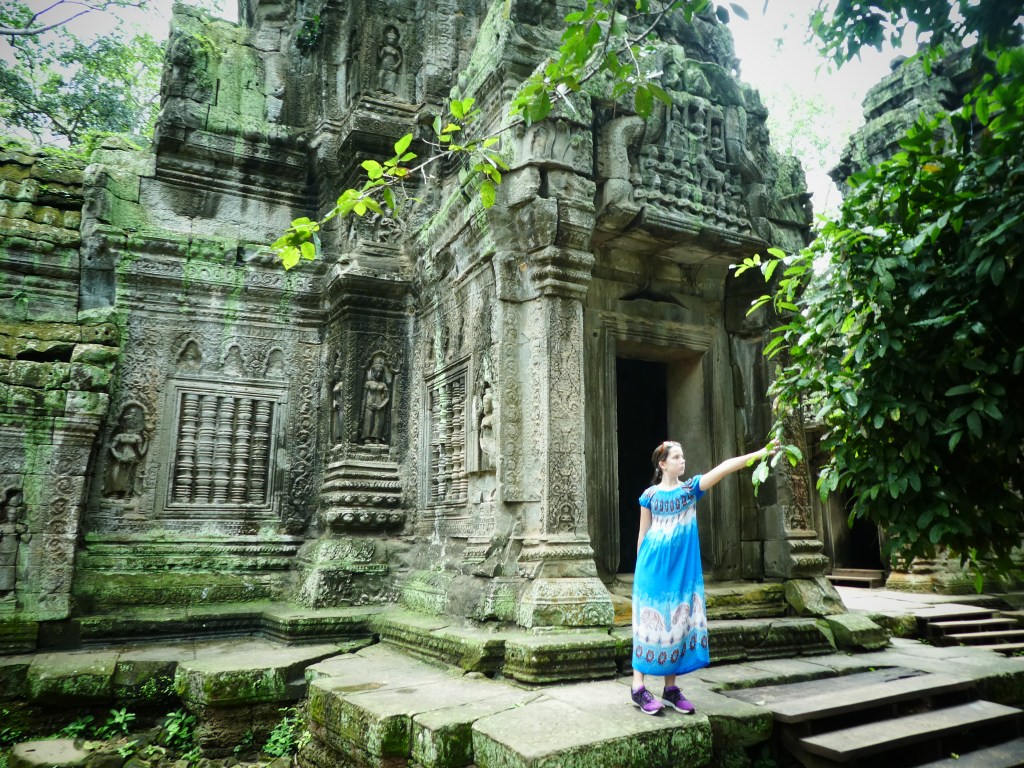
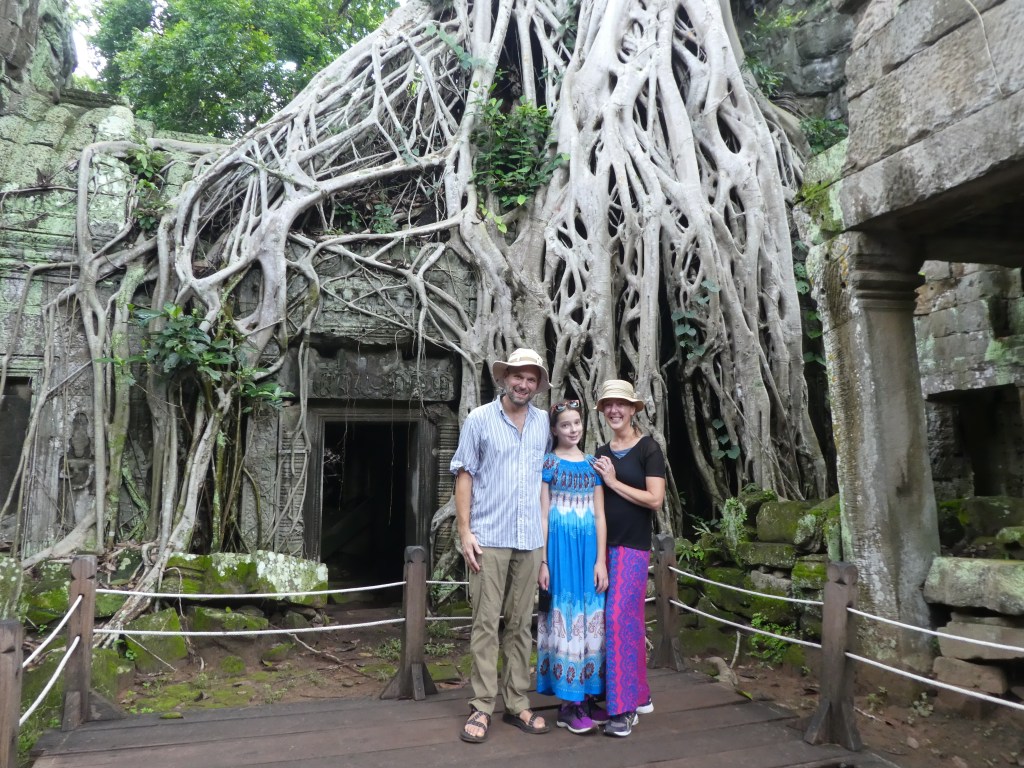
We toured Ta Prohm (where a famous scene with Angelina Jolie was shot for Tomb Raider). This was a wealthy Buddhist monastery, but due to nature re-claiming the abandoned temple, the French were limited when they began restorations because the roots of the giant banyan trees were keeping structures intact. Today, these trees and their roots make this place mysterious.
Day 3: Borady took us to the greater, outer ring of temples. It was raining most of the tour, so we did not spend as much time exploring as the day before. We learned that the rainy season was 2 months late, and thus they were experiencing heavier rains in September than usual. We toured Prah Khan, Neak Pean, Eastern Mebon (my favorite!), and Pre Rup. To get to Eastern Mebon, we crossed a lake that surrounds the small ruin on a wooden walkway. Like with most of the temples, along the path was a group of musicians with missing limbs who played Cambodian tunes. They let us know that they they chose dignity over begging by playing as a band, hoping we would support them so they could support their children. Their music was a welcome as we entered each temple.
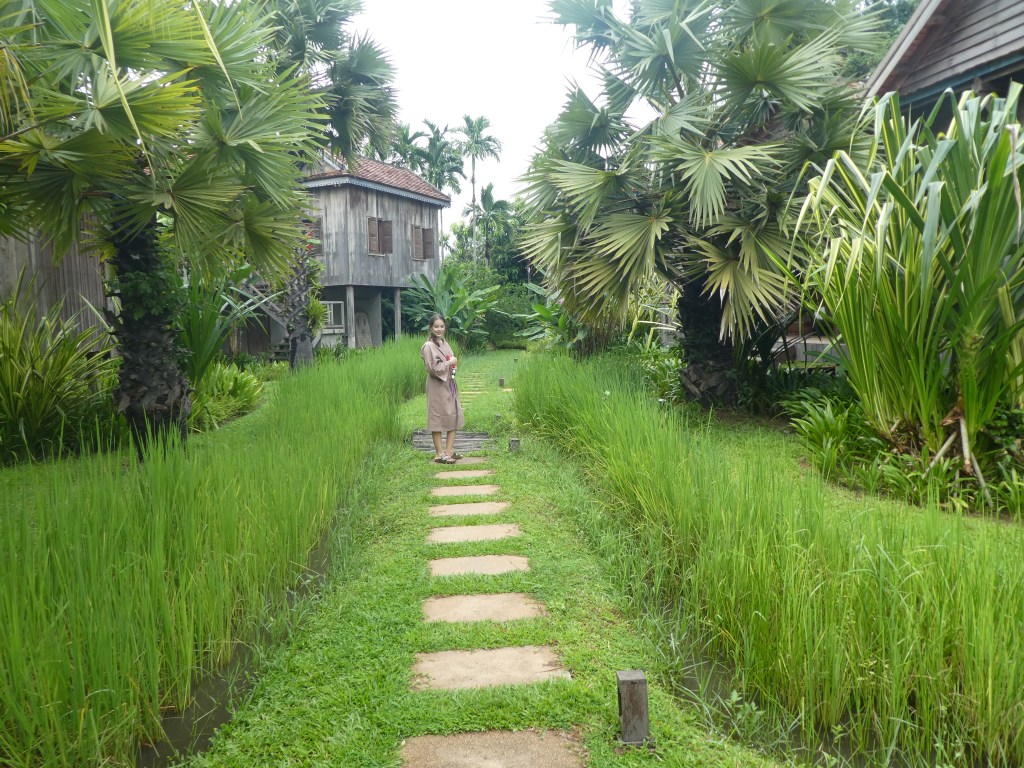
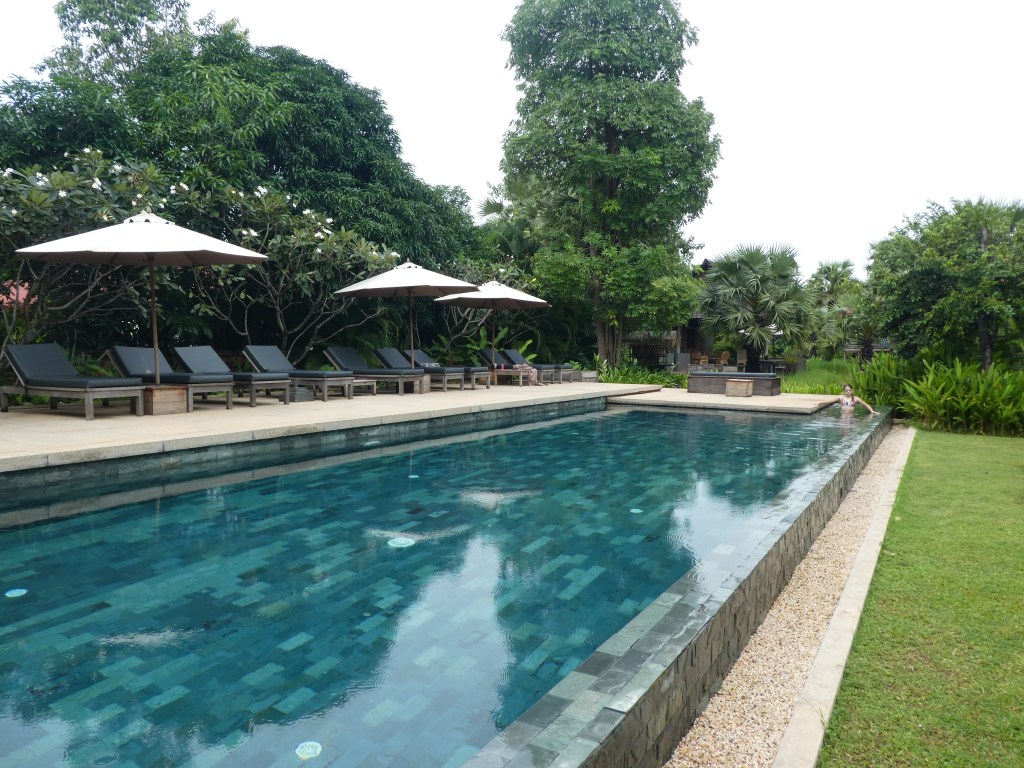
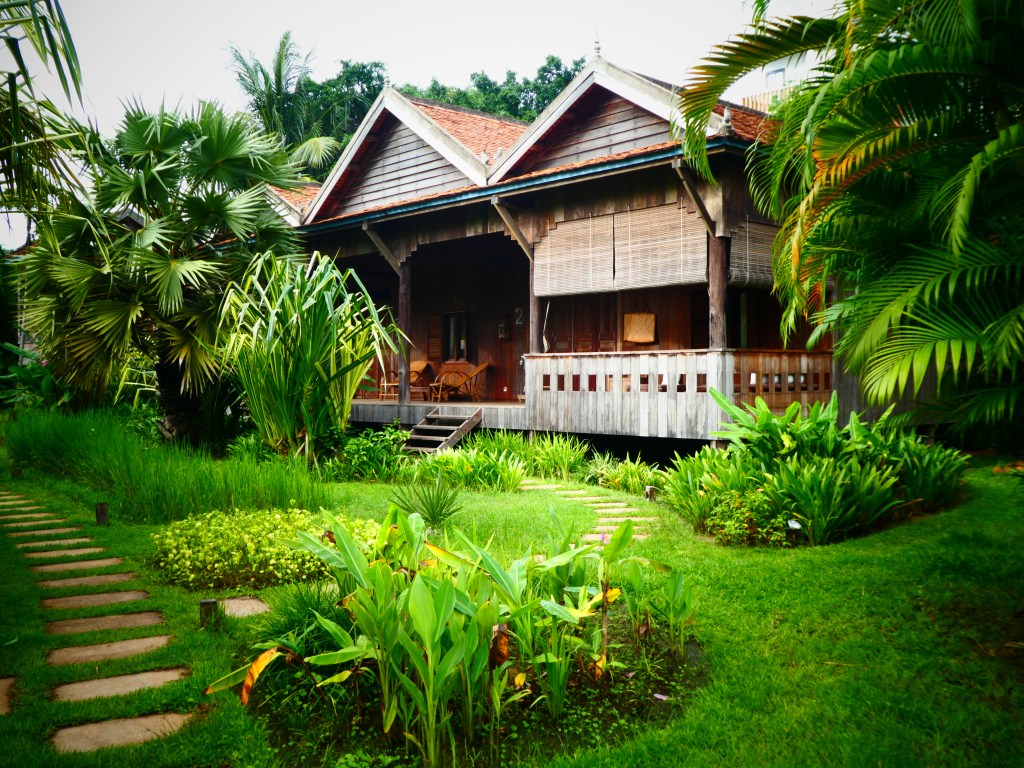
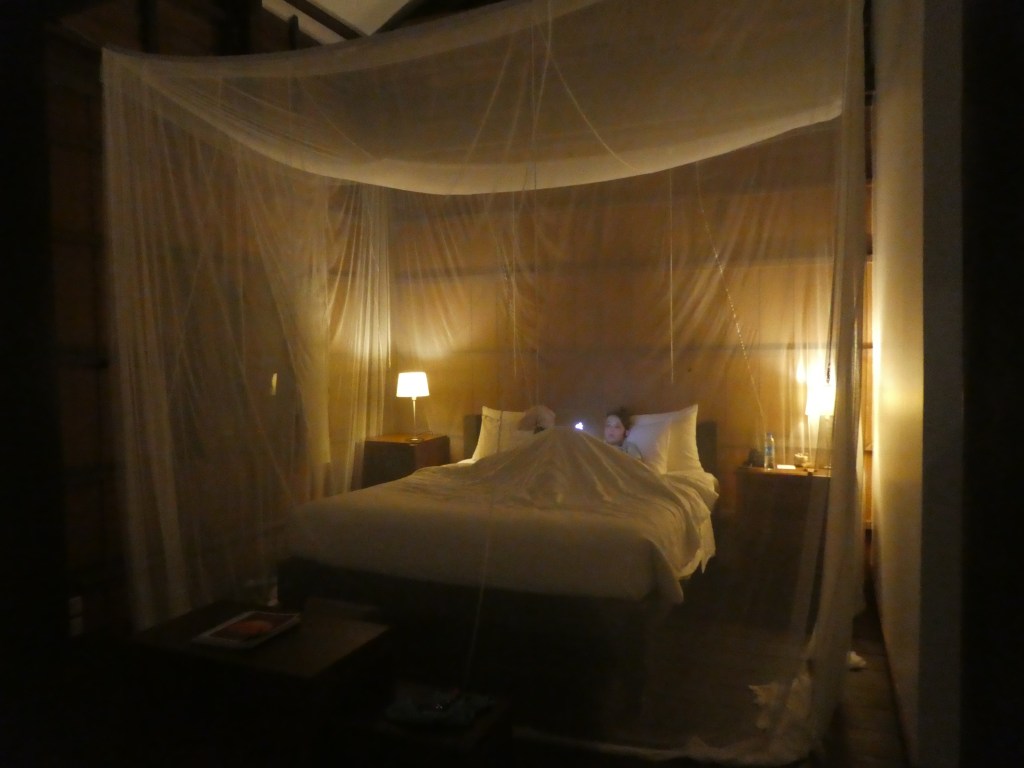
We moved to a new hotel–“Sala Lodges.” This authentic Cambodian hotel has 12 wooden salas each on stilts. Quality/luxury standards. Wow! Not only was the space calming, but I felt like we were living in an earlier century. AND—the best pool EVER. (The owner told me it was a perfect 28 degrees C–with the perfect amount of chlorine so that the eyes don’t sting.)
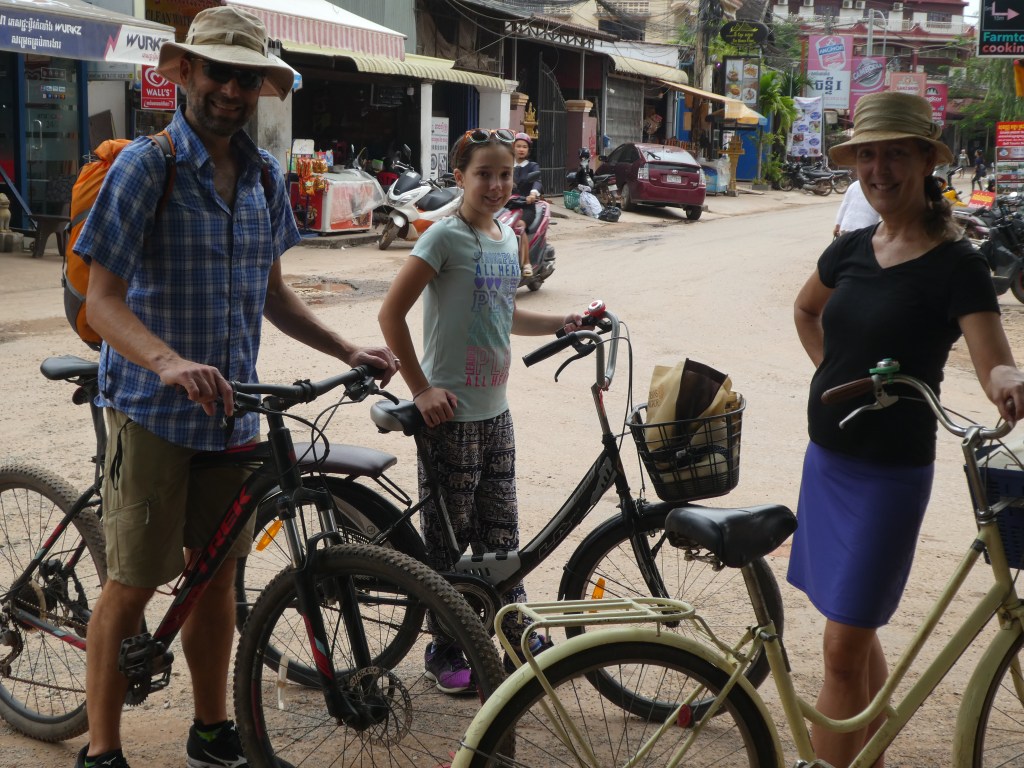
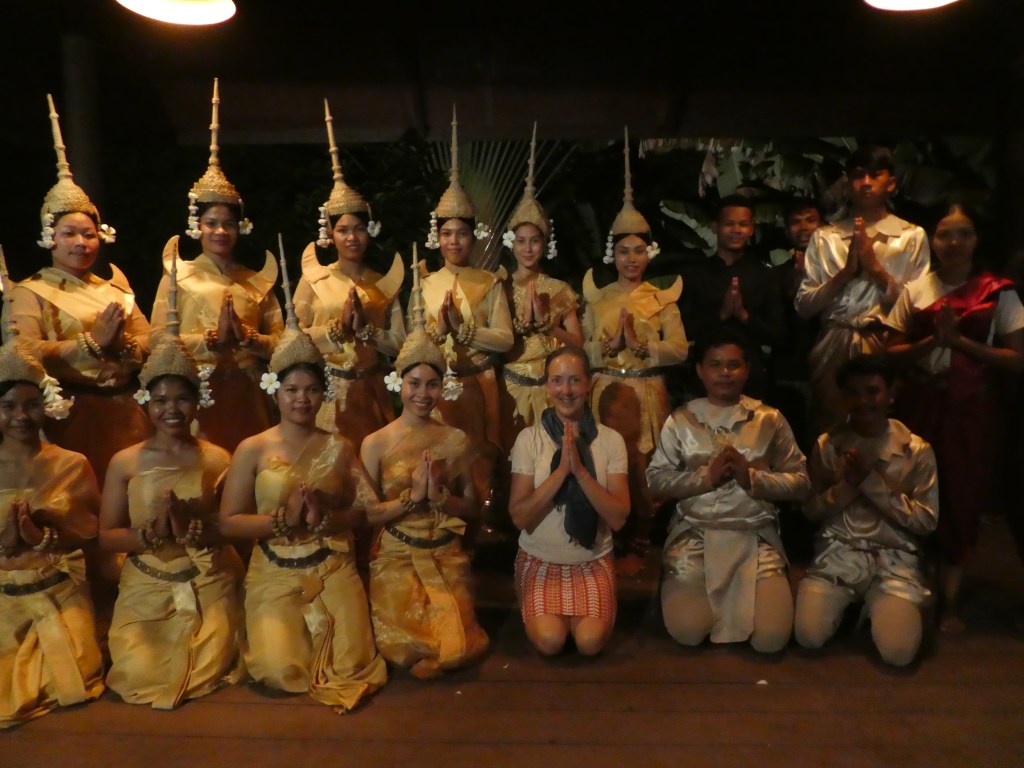
Day 4: We spent Sunday biking around the town center, exploring the National Museum, and concluded our evening watching a traditional dance performed by the Sacred Dancers of Angkor. The dancers hold their hands so that their fingers bend back in a “graceful” arc; however, to do this, their fingers are bound back for long periods daily–painful. The dance, I admit, was mesmerizing. I felt like I was put in a trance.
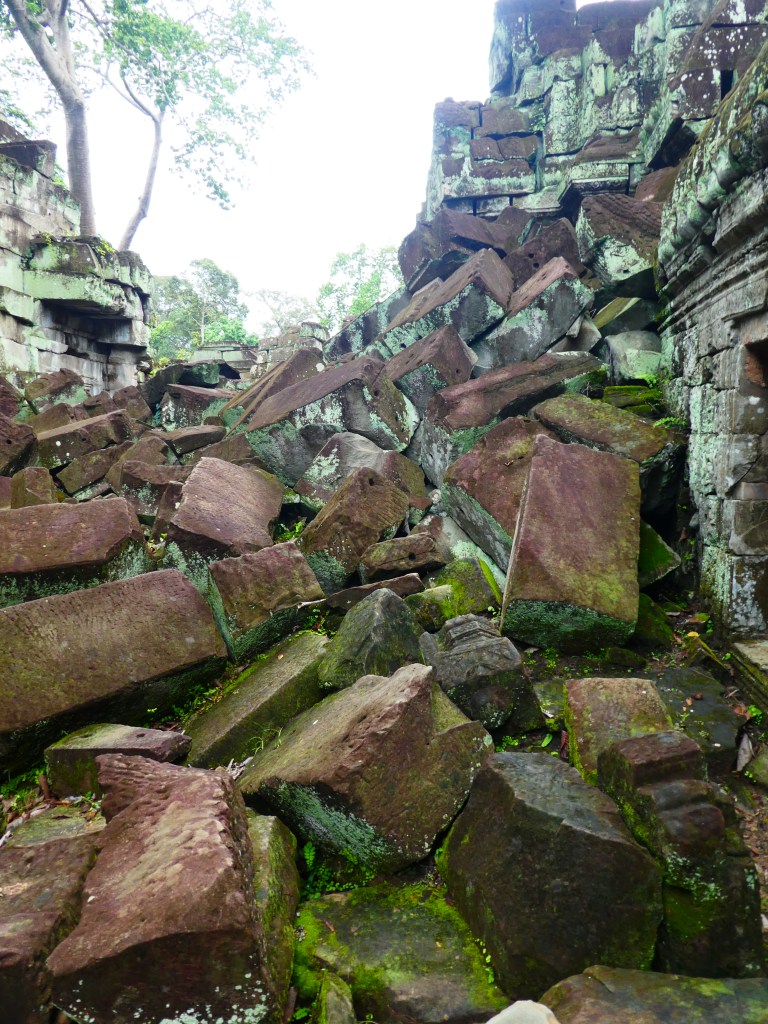
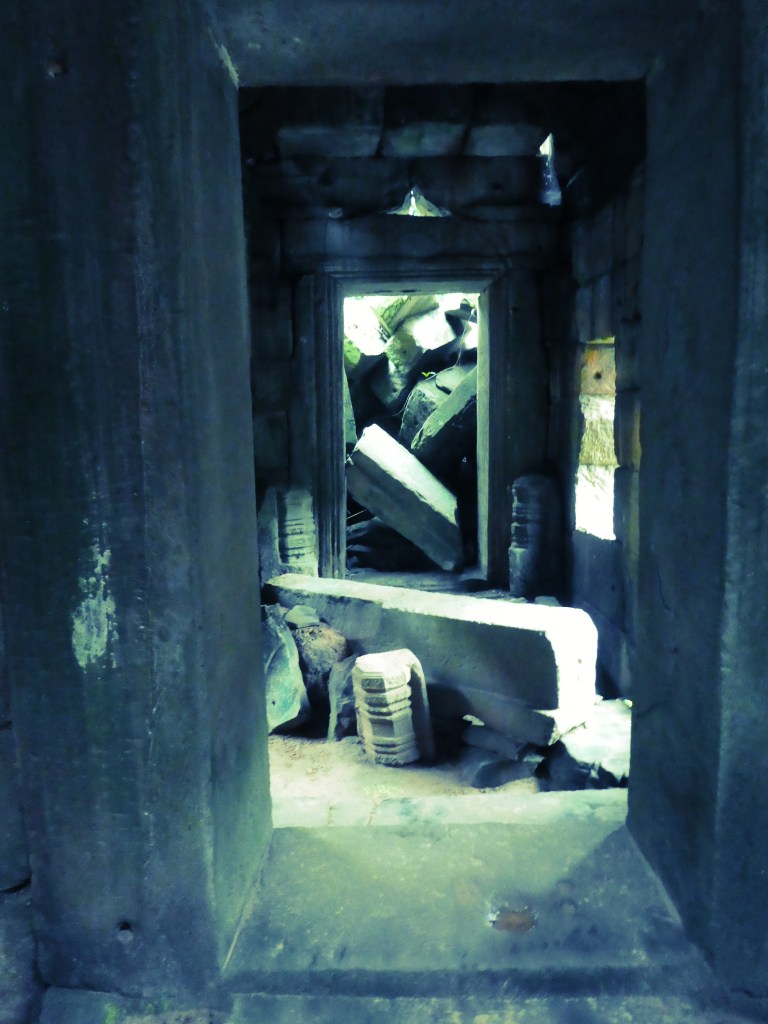
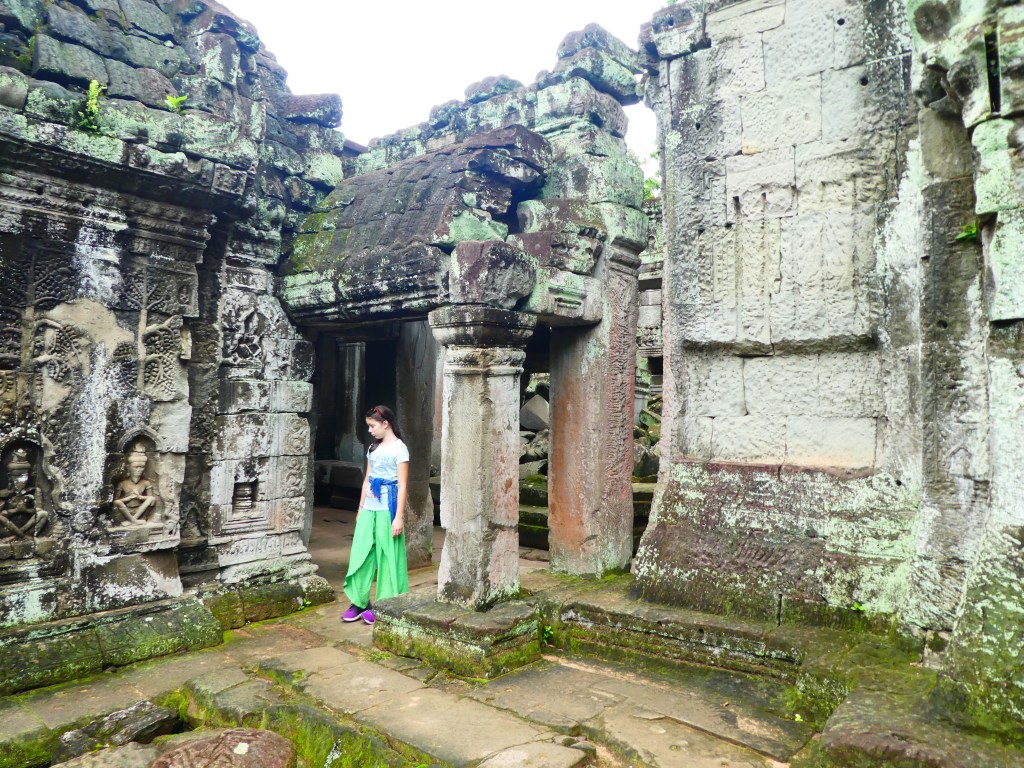
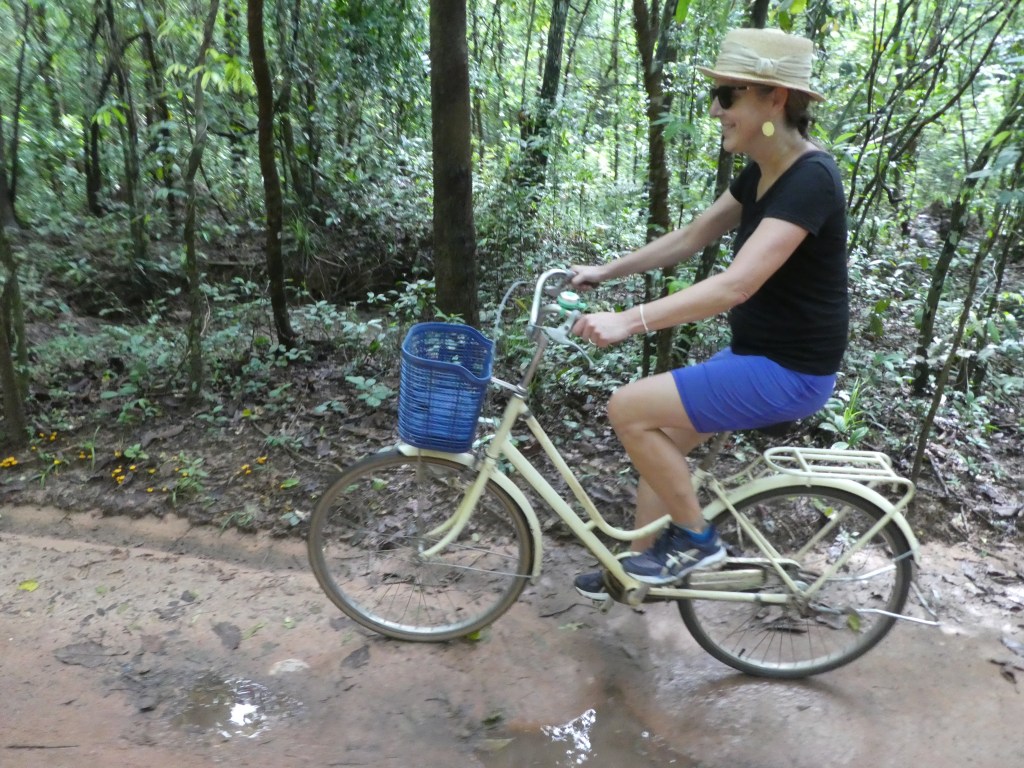
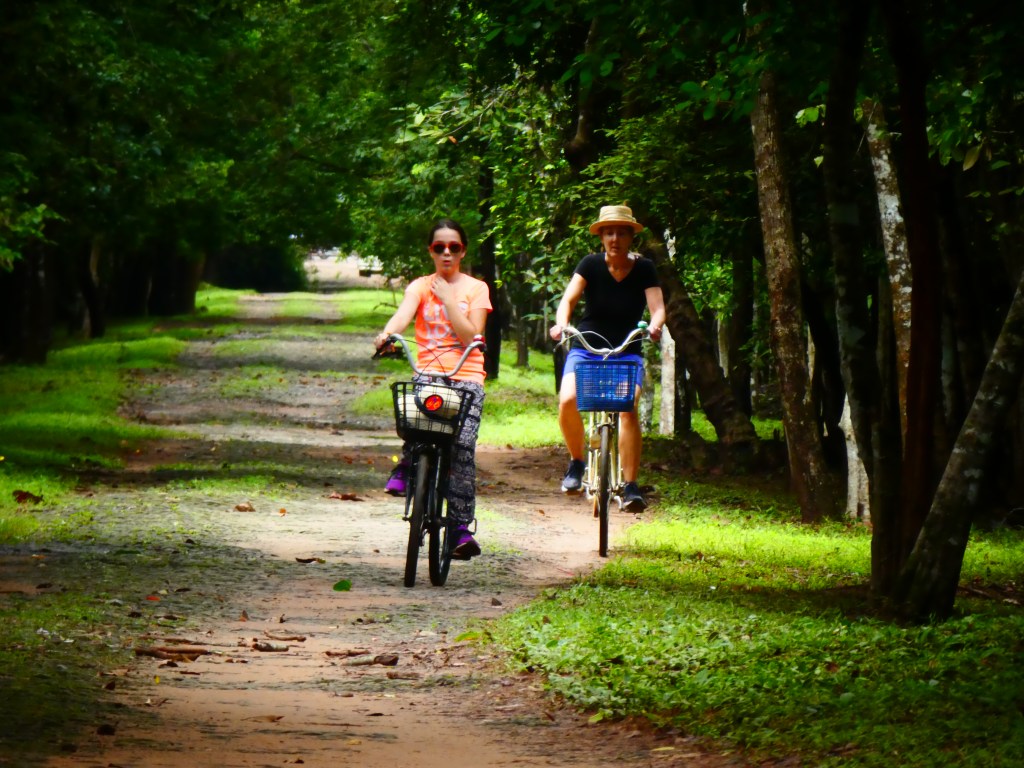
Day 5: We had one more day on our 3-day pass to the temples, so we used the hotel’s bikes and went back to Ta Prohm and Angkor Wat, but also explored a lesser known temple: Ta Keo. It was great to be one of the few people at this temple, yet to scramble all over such an important place–no toilets available, for example–with the volume of tourism today must bring about changes to how these temples are experienced. More important than whether one gets hurt, the human impact on these structures is extensive.
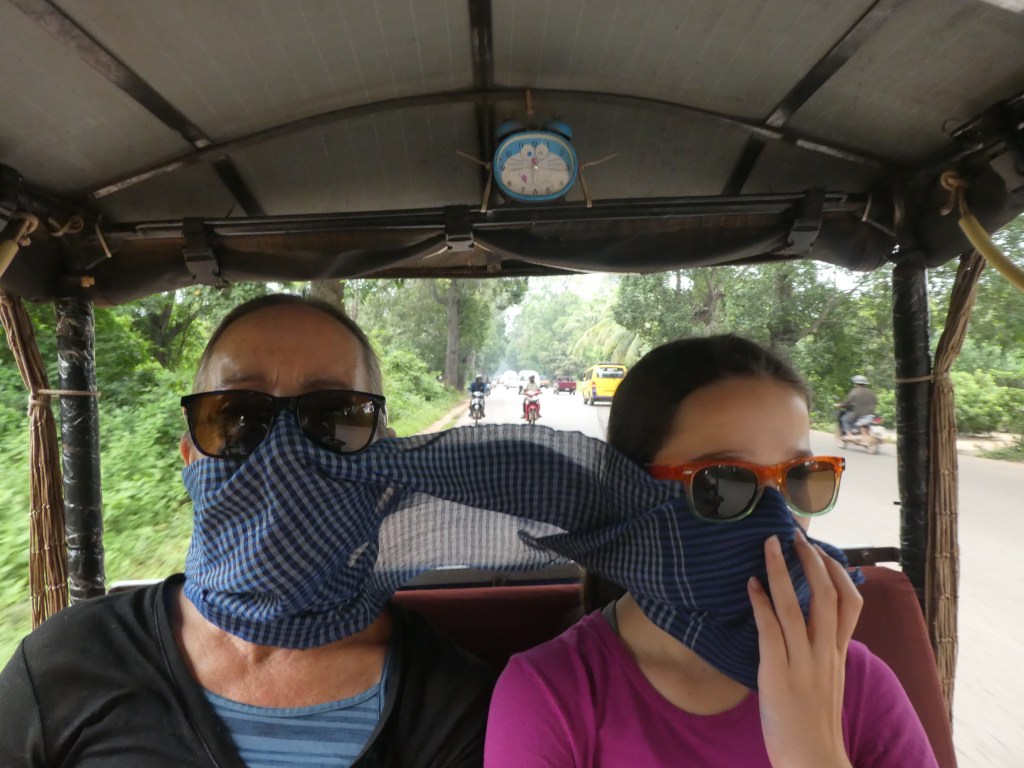
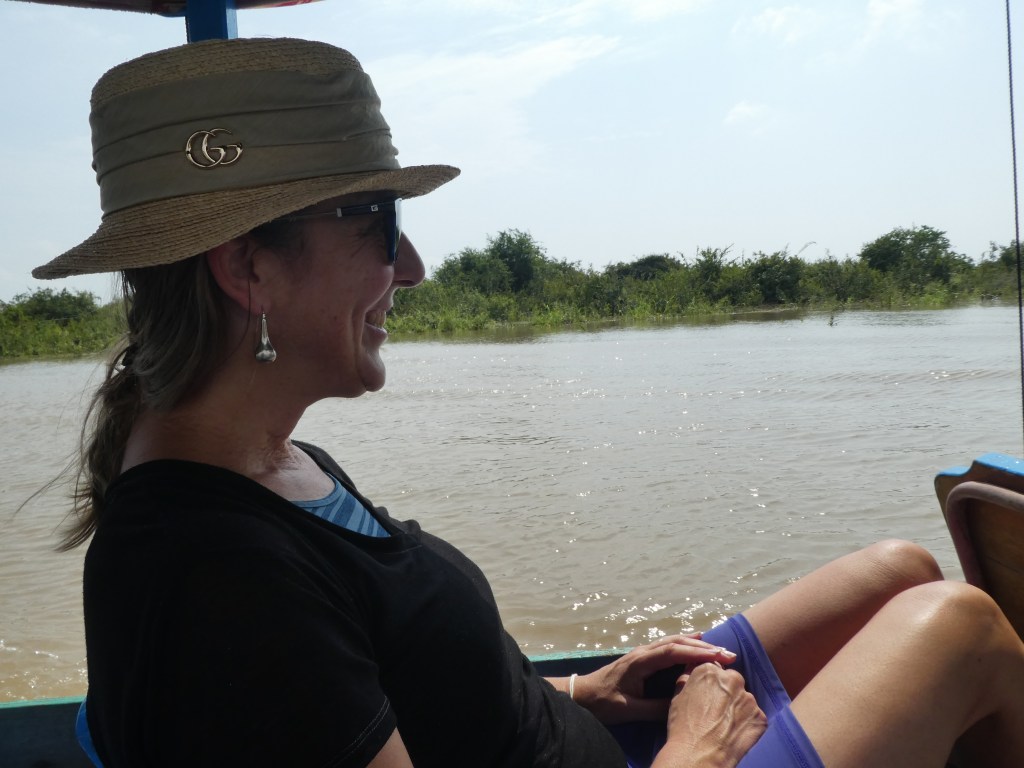
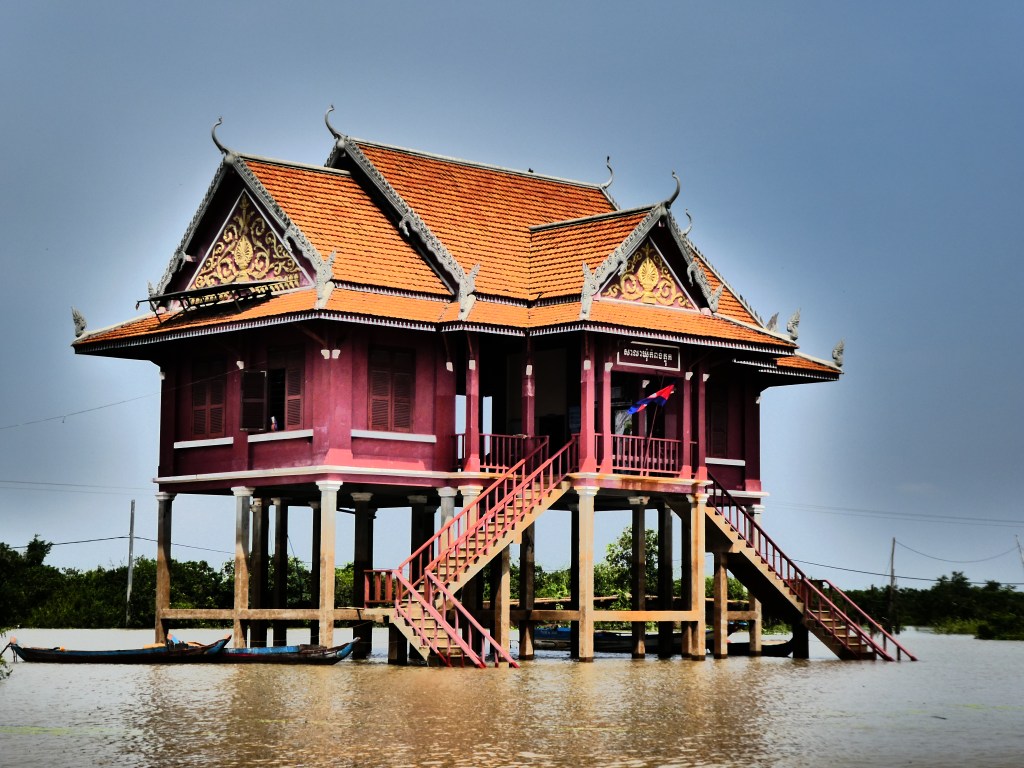
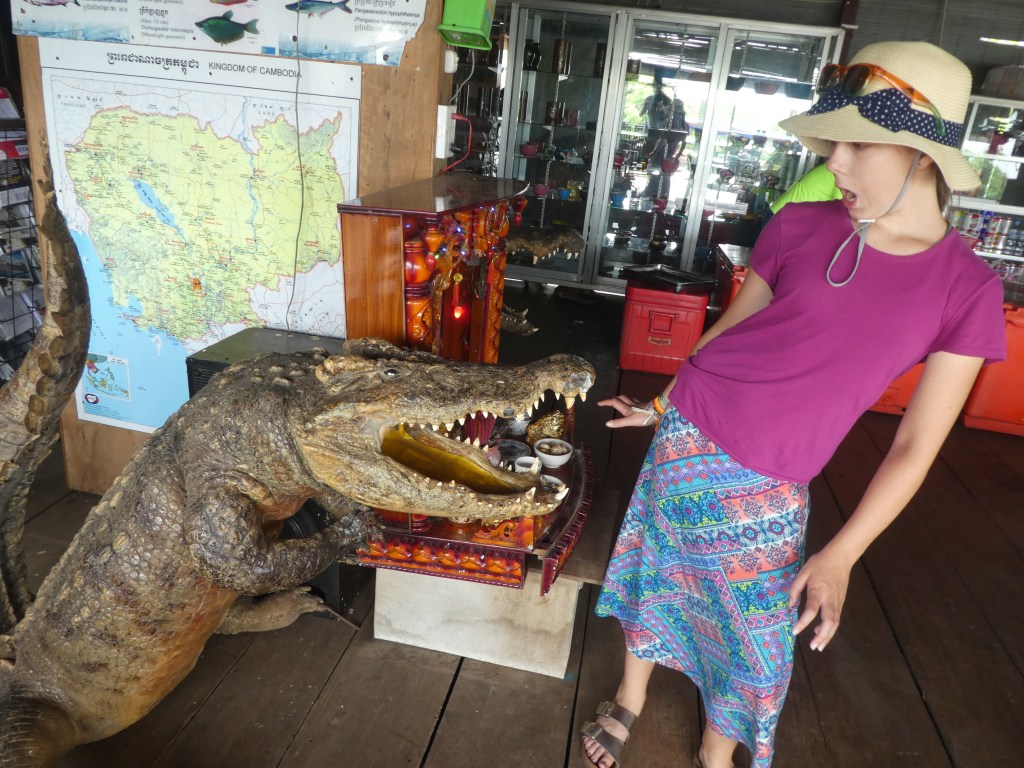
Day 6: We decided to take a one-hour tuk-tuk to a floating village on lake Tonlé Sap, the largest freshwater lake in Southeast Asia. The inhabitants are partly Khmer and largely Vietnamese (a complicated history). Scout and I found we needed to wrap our mouths and noses with a scarf due to the road pollution, but the ride was still fun. A woman boat owner, accompanied by her toddler, took us on an hour ride to see the floating village. I still have not figured out why people live on this lake, but there is a school, a temple, a government building, and some restaurants. The constant and multiple boats on the lake are louder than what I experience on any given Saigon street. Seeing life outside of Siem Reap, though, was important–new houses next to thatched shacks, flooded streets with youth swimming and fishing in them–I wonder how each person survives, how they “make a living.” The resilience of people is strong.
Other Notes of Interest: The people in Cambodia are extremely deferential. They apologize for “anything that they are unaware of but may have made one unhappy.” They tell their life stories to strangers; they criticize their government, knowing that if they are overheard they may be imprisoned or killed. They care for their impoverished children with special schools, training’s, and campaigns to help tourists understand that they shouldn’t contribute to certain activities (i. e. buying from children who are selling goods at temples or visiting orphanages).
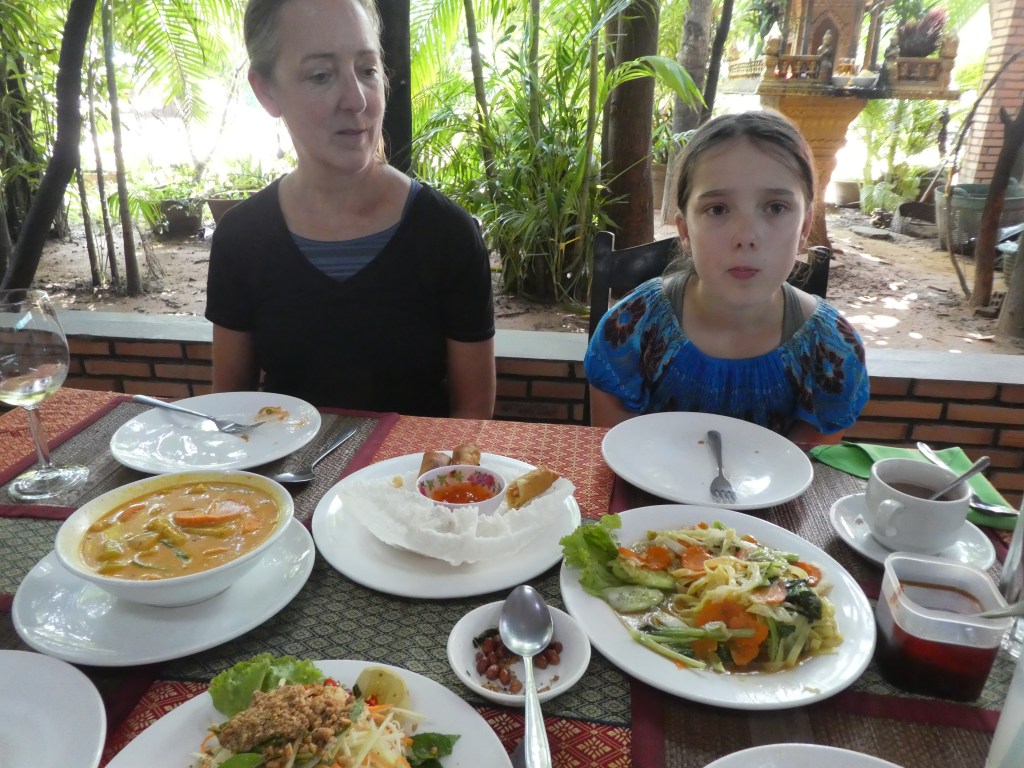
We met wonderful Cambodians, especially at a local restaurant: The Khmer Grill. I won’t easily forget Sanoon and “Mr. Carrot.” They talked about the Chinese tourist invasion and how that drove up living costs (and, like the Vietnames and Japanese, they dislike the Chinese “rudeness” and demands). Specifically, I loved the Khmer grilled eggplant dishes! Not sure how I can live my life without it. We plan to return.
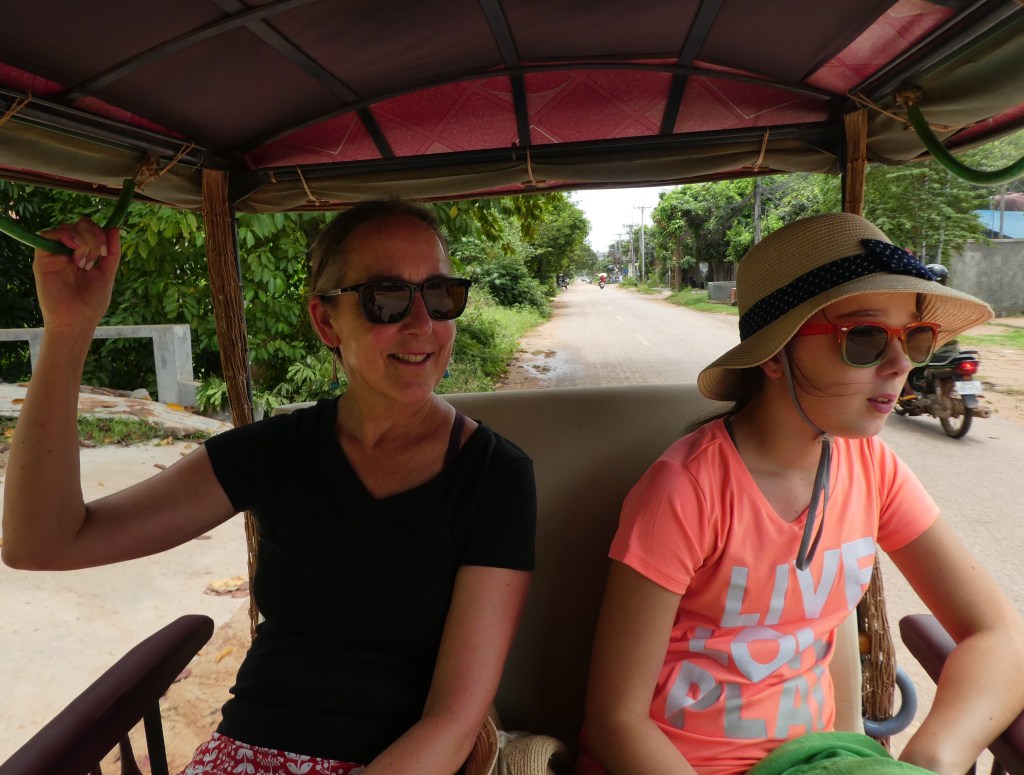
1st tuk-tuk ride! 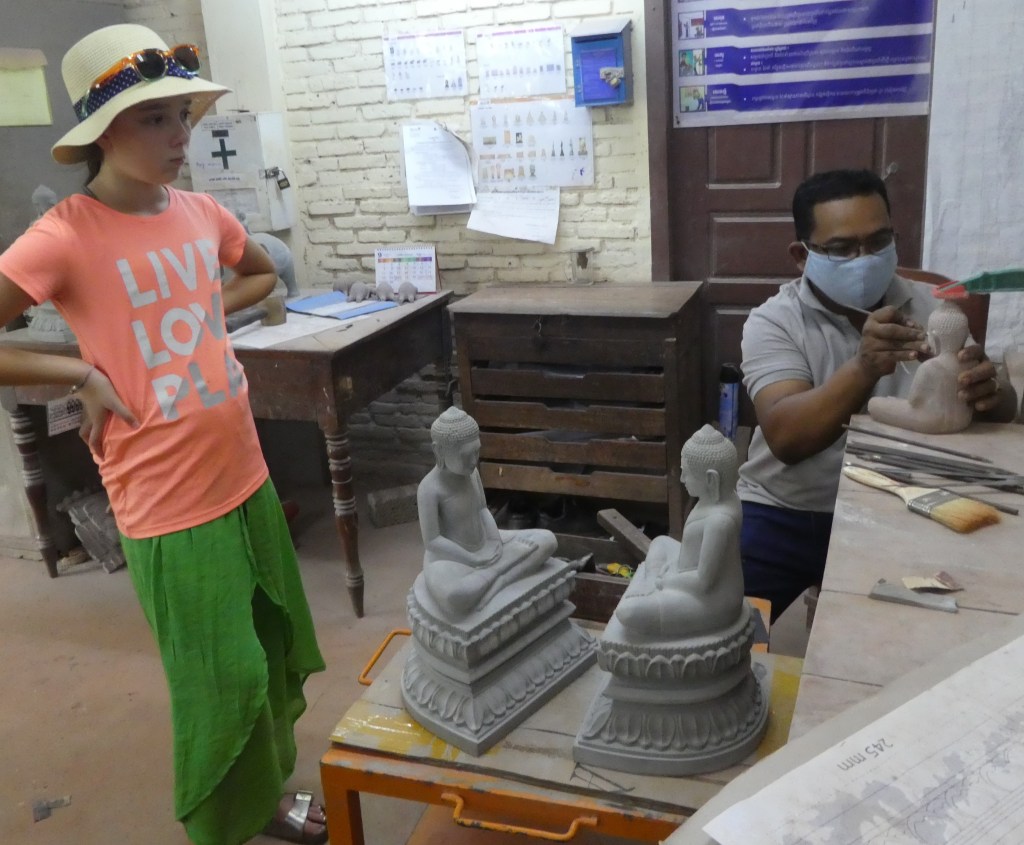
Artisan school 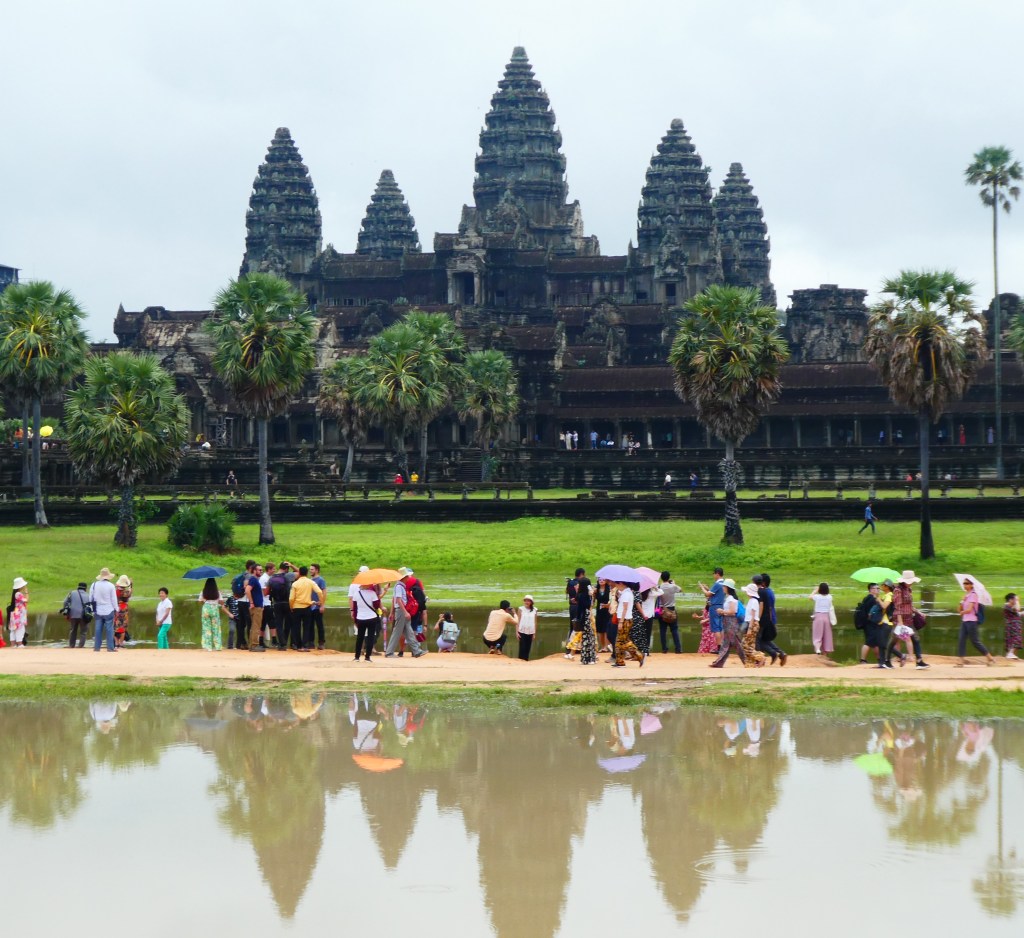
Angkor Wat 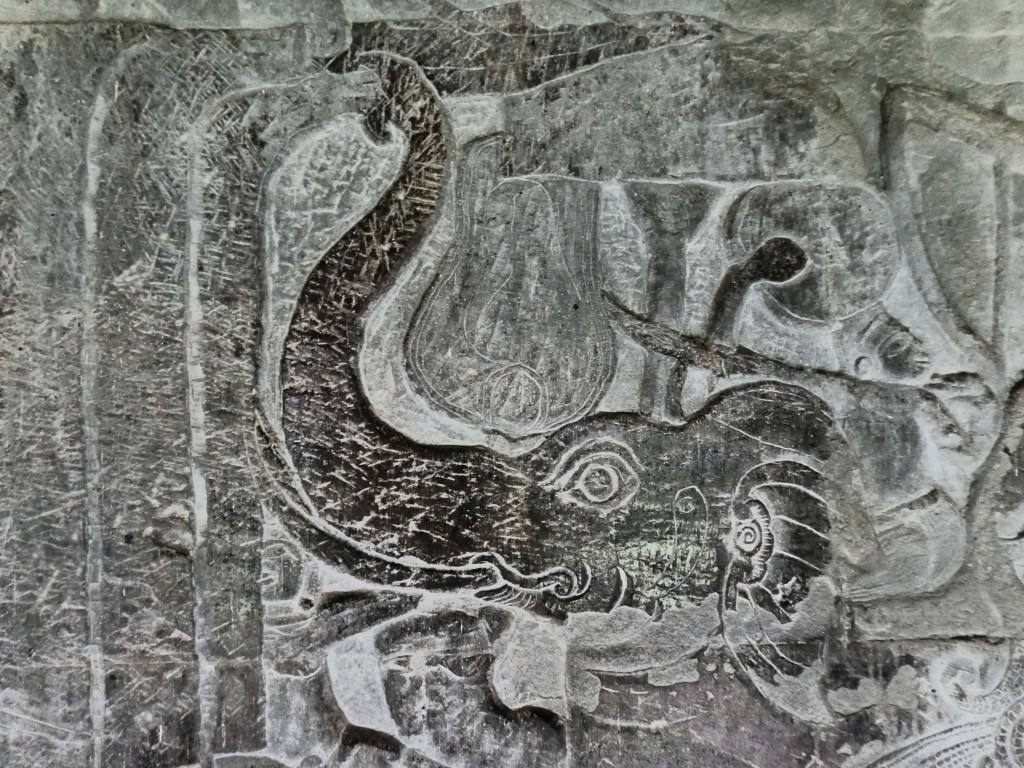
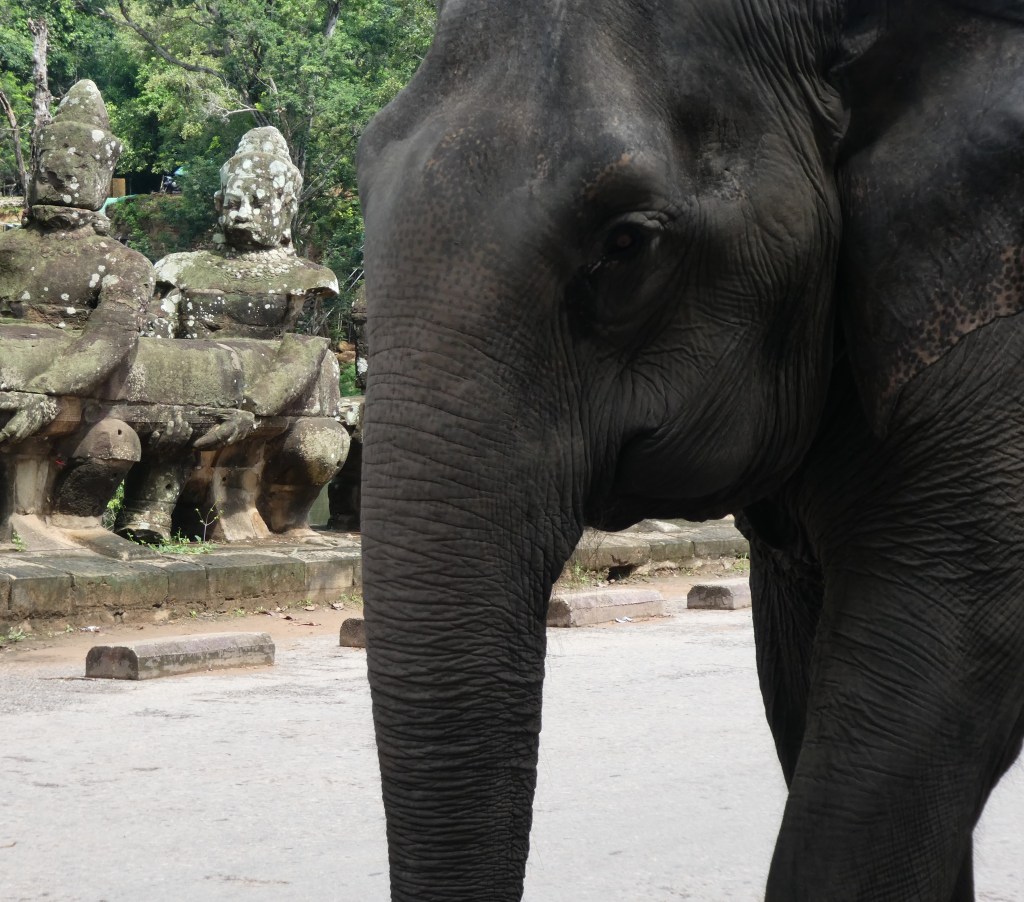
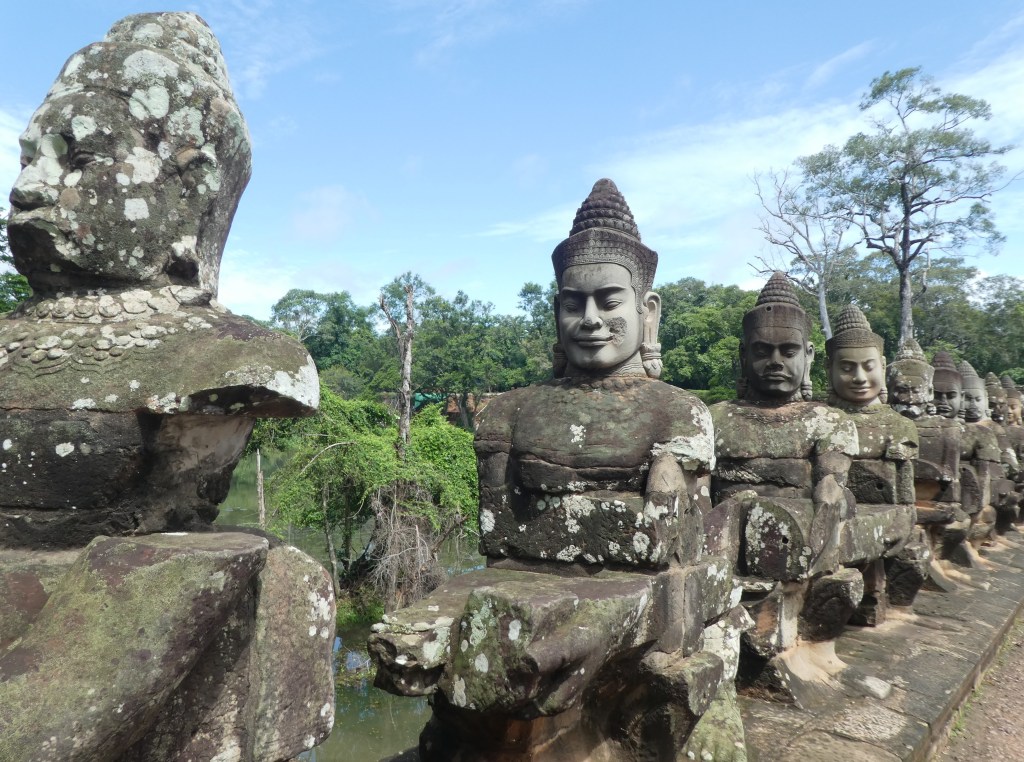
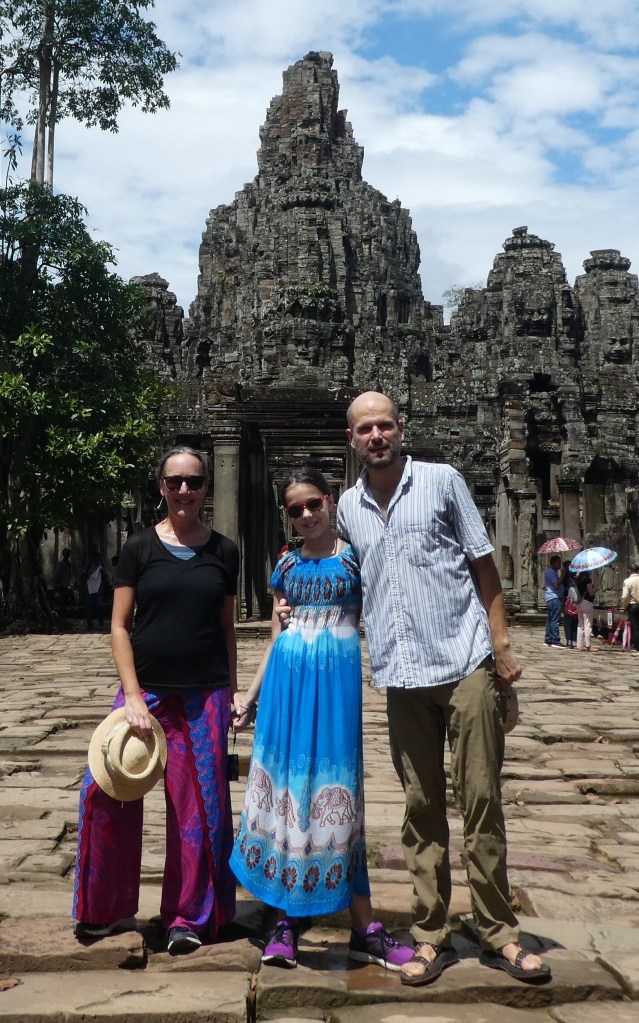
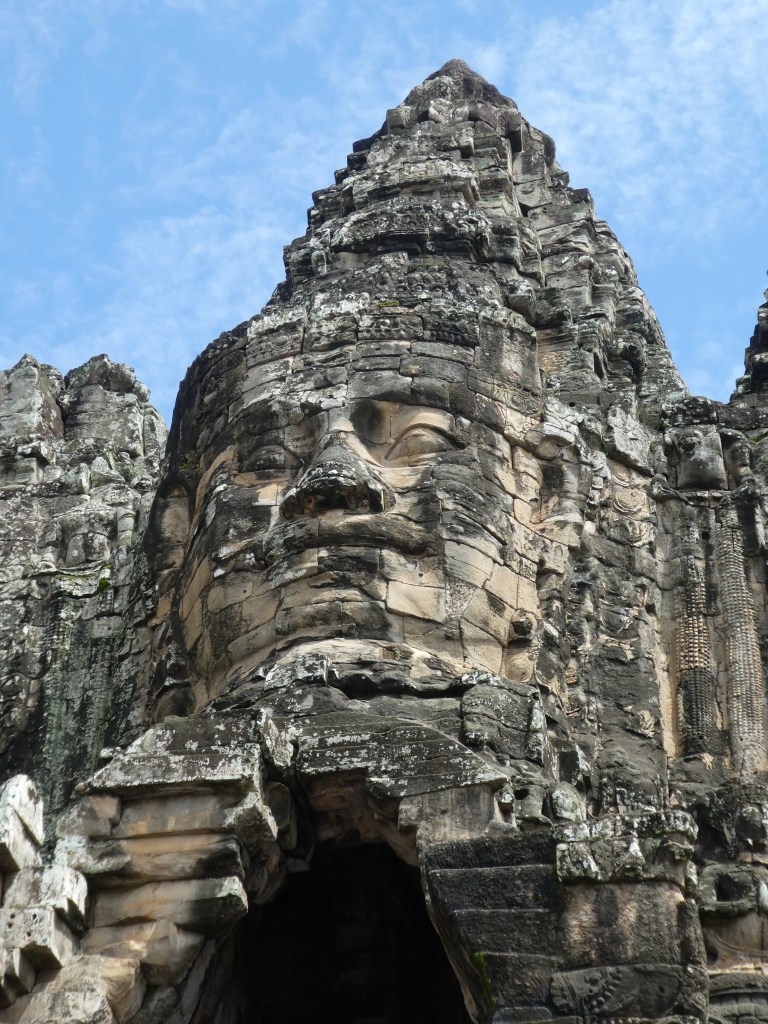

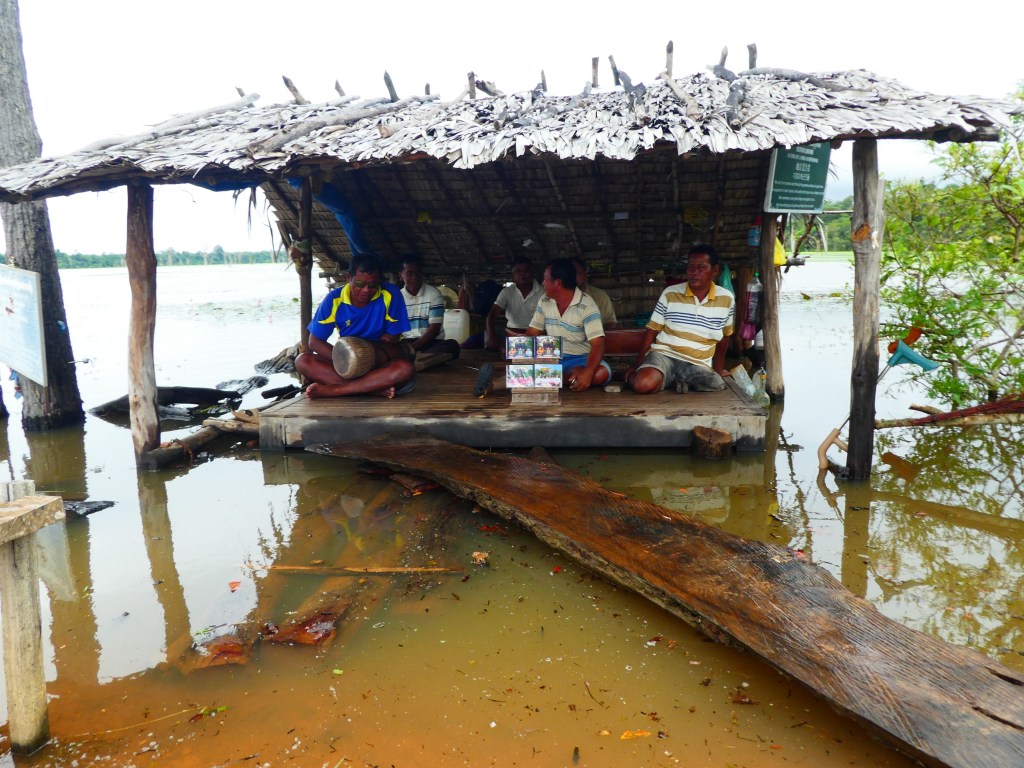
Living with music 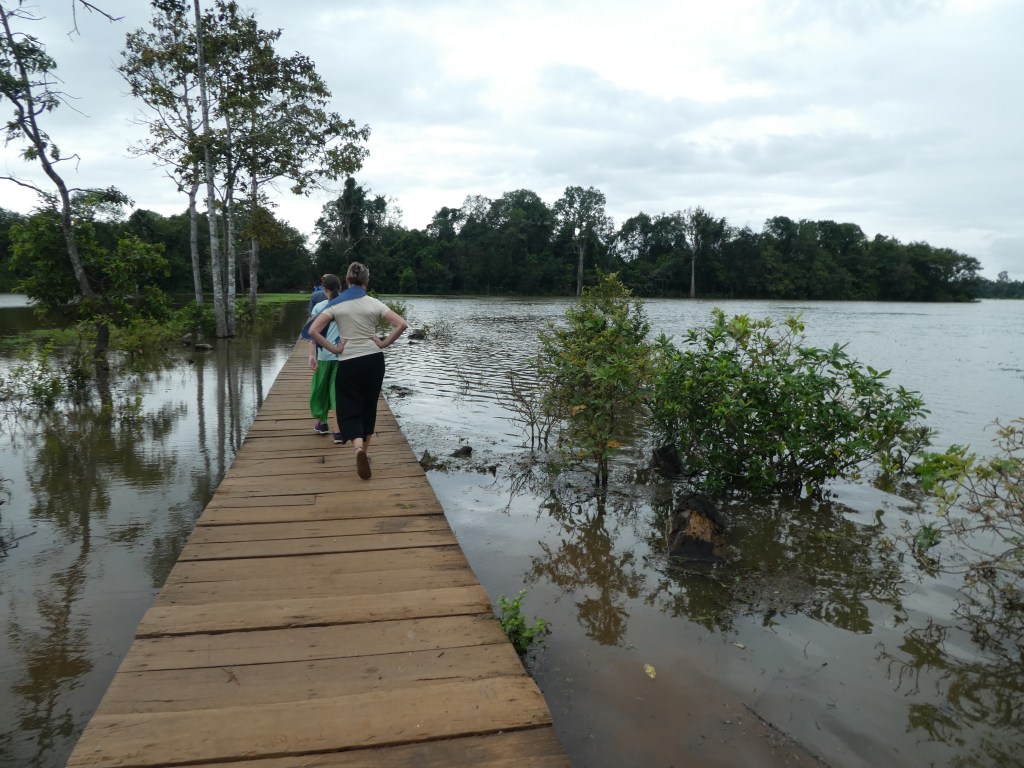
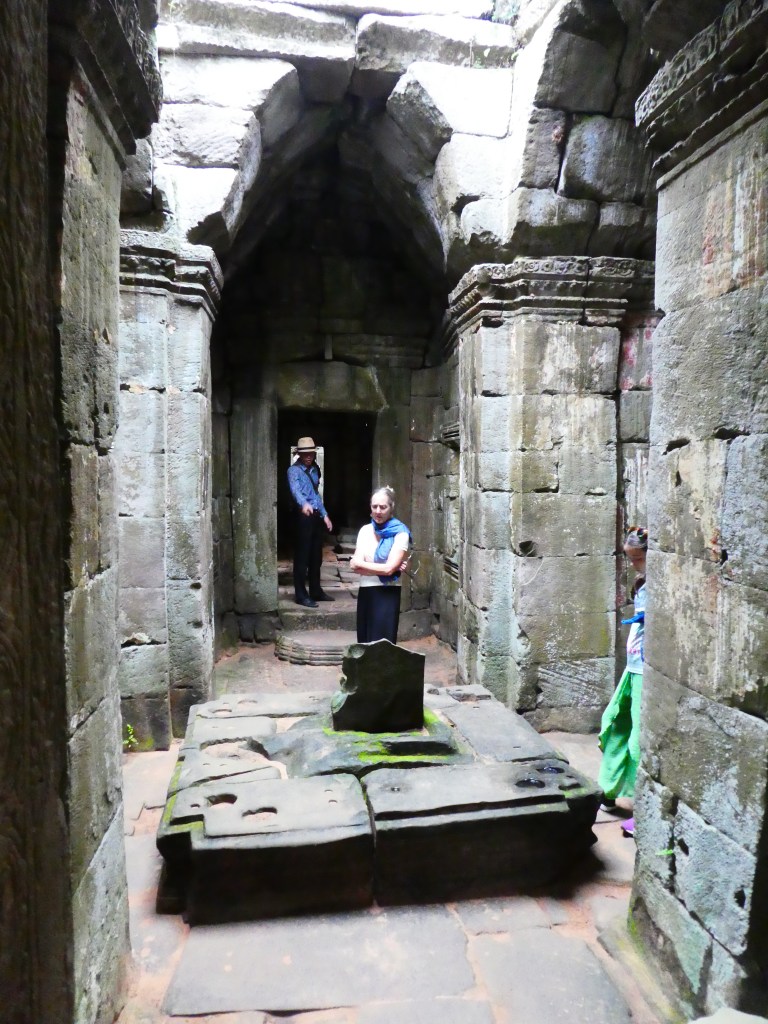
Finding a temple 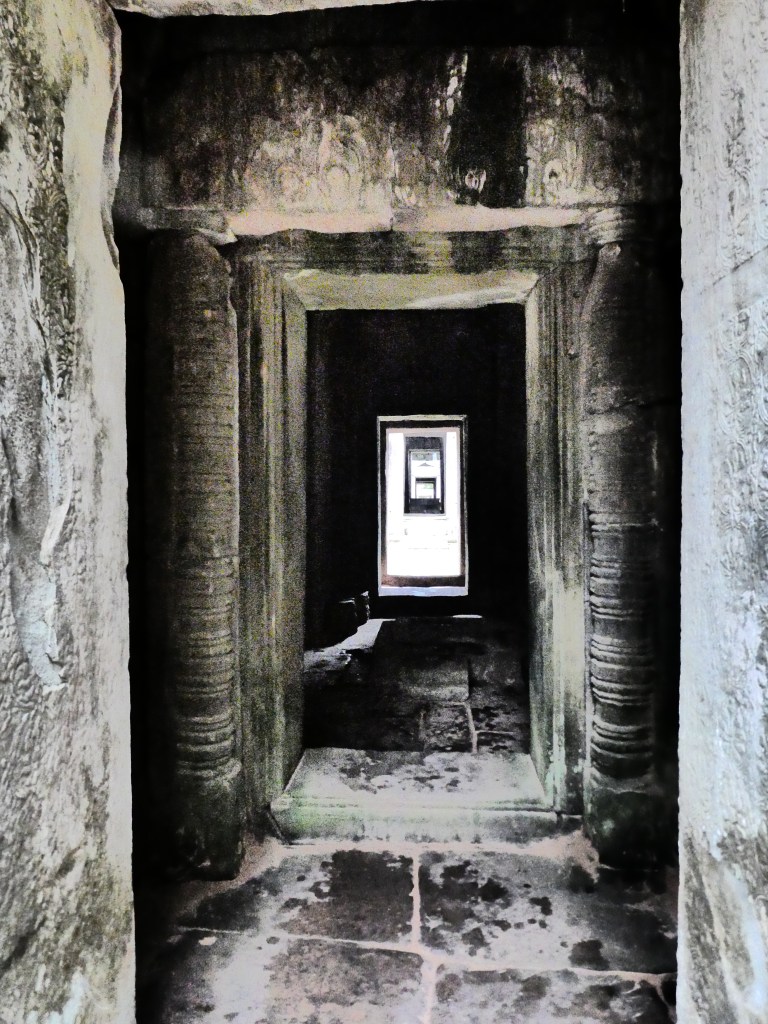
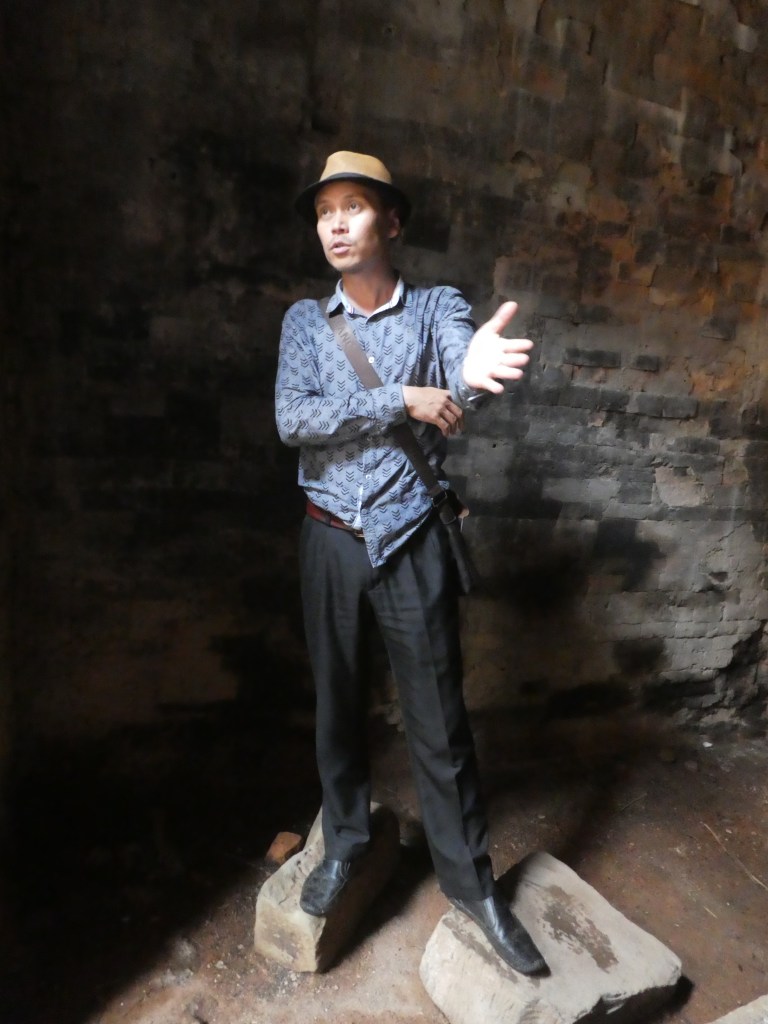
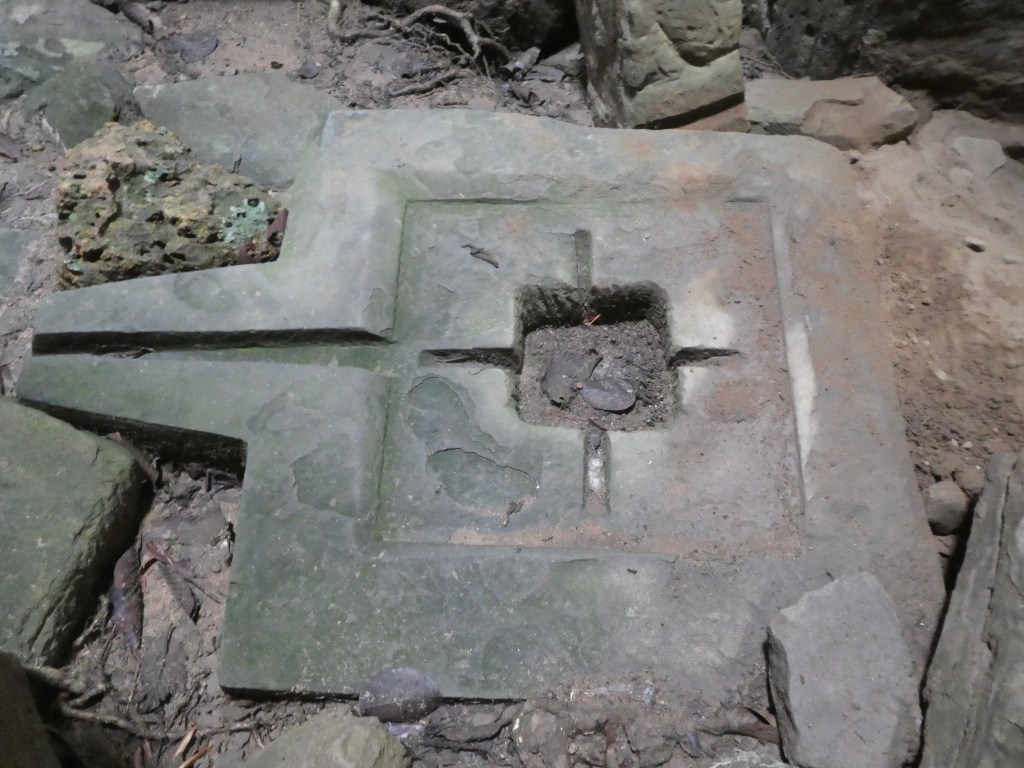
Borady tells about cremation site


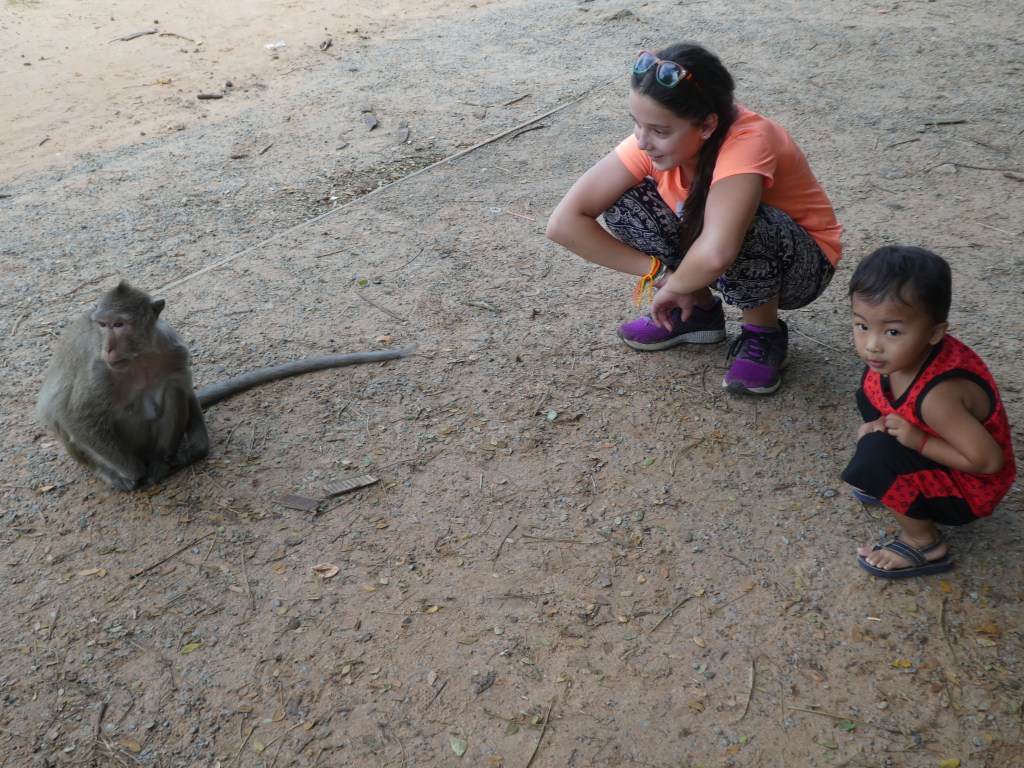
Temple monkey 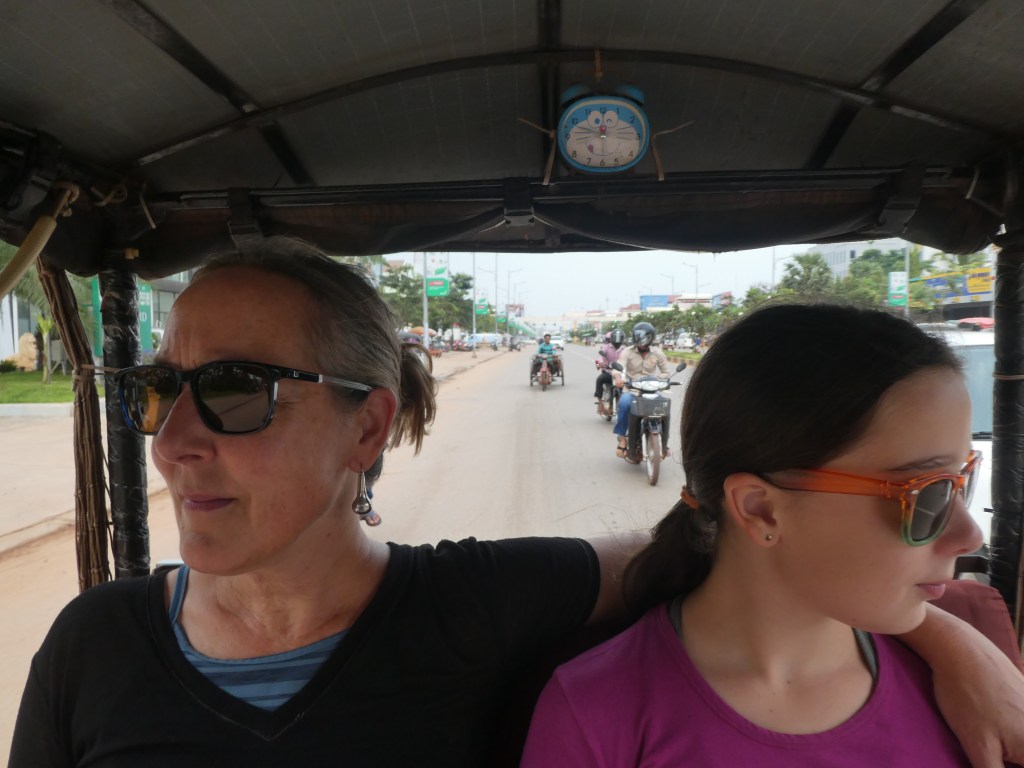
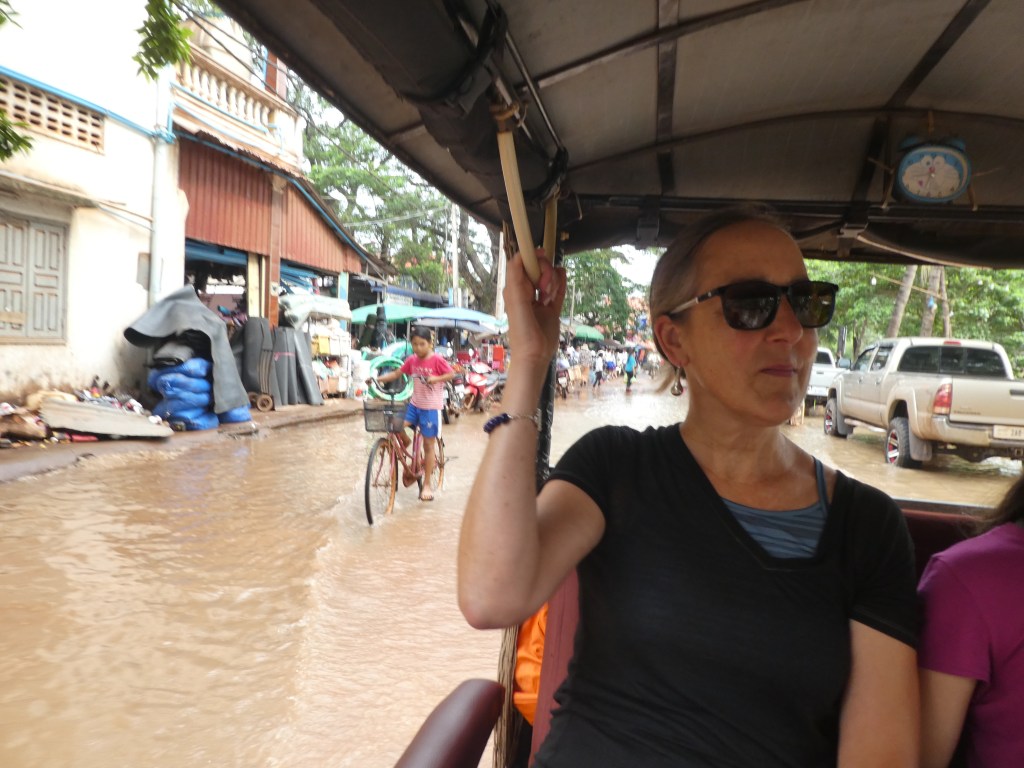
Heavy flooding 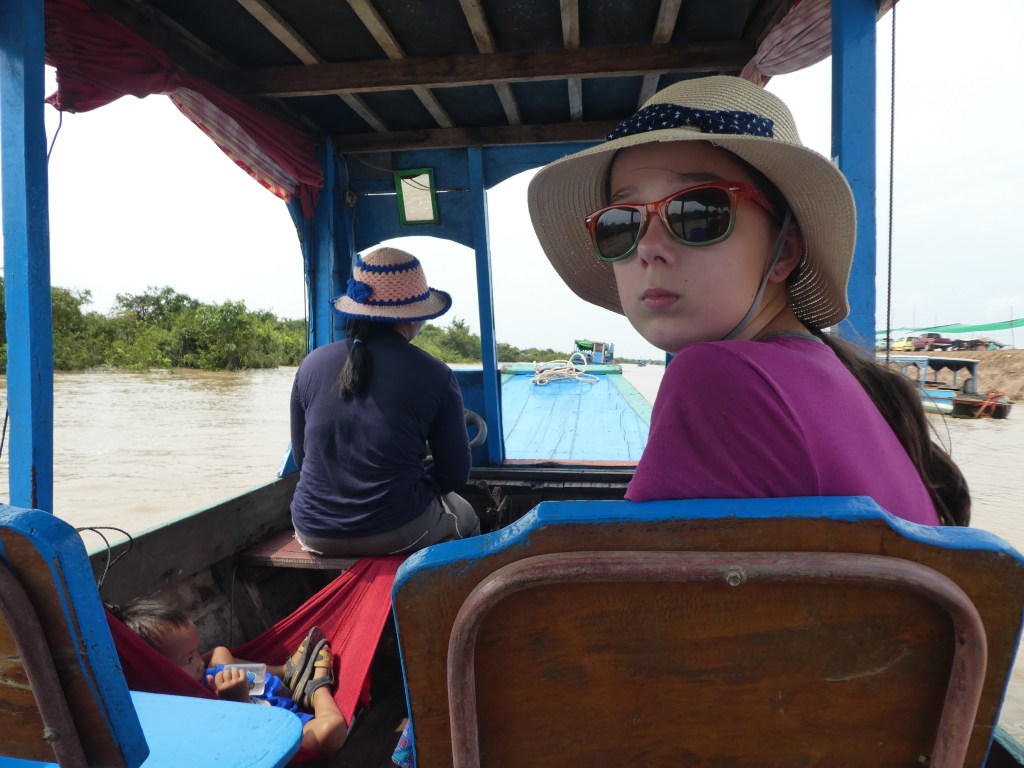


 A Year in Vietnam
Great post, text & images! Spent some time in Cambodia a couple yrs back but just Phnom Penh and on the coast, not time for Siem Reap. Having heard about the rampant over-tourism there, it’s good to know if you go a bit further afield you can still experience untrampled temples. Loved the food – only thing I’d not eat again was the grilled tarantula!
LikeLiked by 1 person
Great posts, Boo! I’m glad that – even though your job description changed – you’re still able to travel. Keep it coming!
LikeLike
I LOVE all the photos and your descriptions. Makes me want to travel again–oh wait–I will be soon. 🙂 Just in the U.S though.
LikeLike
What an awesome experience….thanks for sharing with us!
LikeLike
Astonishing place, wonderful travelers, fabulous photos!
LikeLike